Best for
Self-directed learners who need repetition, reminders, and a gentle path into a new language.
Curated brain-training & logic apps for Android



App icon and screenshots © Duolingo or the applicable rights holders. Displayed in limited form for identification and independent review. Source: official Google Play listing.
Duolingo is the obvious language-habit pick: approachable, structured, and best used as daily practice rather than a complete language plan.
Self-directed learners who need repetition, reminders, and a gentle path into a new language.
Advanced learners who need deep grammar explanation, live correction, or professional fluency prep by itself.
It anchors the Education category with a mainstream learning app whose strengths and limits are both well understood.
Check current subscription limits, lesson access, and whether the language you want has enough depth.
Duolingo belongs in the Education category because it solves a real beginner problem: getting started and returning tomorrow. Short lessons, reminders, streaks, and immediate feedback lower the emotional cost of practice. That does not make it a complete language plan, but it does make it one of the clearest examples of an app that turns intention into daily contact.
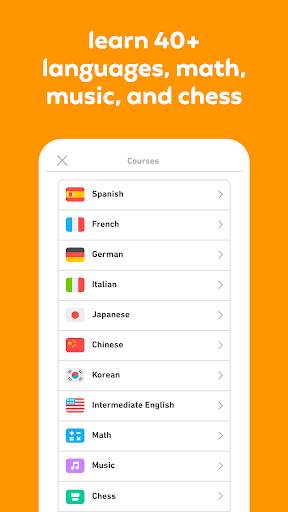
The public listing now includes language, math, music, and chess. That breadth is impressive, but it also means readers should not judge the app as one uniform course. The depth of Spanish, French, or English may not match the depth of a smaller or newer subject. A careful review should tell readers to inspect the exact course they want, not assume the brand name guarantees equal quality everywhere.
The app can build vocabulary exposure, listening habits, and confidence with sentence patterns. It does not replace conversation, long-form reading, writing correction, grammar study, or cultural context. Learners who need real fluency should pair it with speaking practice, media, notes, and external feedback. That caveat is not an attack on the app; it is the difference between a practice companion and a full curriculum.
Readers should check current free-tier limits, subscription prompts, lesson availability, and whether the chosen language has enough depth for their level. They should also decide whether streak pressure motivates them or creates guilt. LogicAppGuide should recommend Duolingo as a strong entry point for daily practice, especially for beginners, while being explicit that serious learners need more than one app.
The healthiest way to use Duolingo is as one layer in a wider routine. Pair it with listening to native material, speaking practice, reading simple texts, writing notes, and asking real people or stronger tools for correction. That framing makes the app more valuable, not less. It keeps the reader from expecting a streak to equal fluency. LogicAppGuide should praise Duolingo for momentum while refusing to sell it as a complete education by itself.
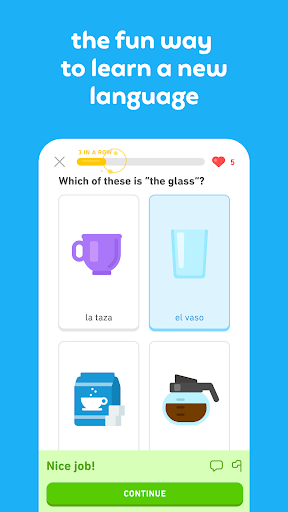
Duolingo: Language Lessons exposes Google Play screenshots in the public listing data. The review uses those images to judge readability, interface density, and whether the advertised experience is clear before a reader leaves for the store.
The public record used here is last updated 2026-02-24, with version Varies with device. This context frames the review, but it does not replace the page's install cautions or comparison notes.
Duolingo: Language Lessons is compared against nearby LogicAppGuide picks in Education, so the recommendation answers a reader-fit question instead of repeating a store ranking.
For Education readers, the review focuses on whether the app's main loop is distinct, readable on a phone, and still worth checking after ads, hints, or purchases are considered.
Duolingo is valuable because it lowers the starting barrier. For many readers, that is the difference between wishing to study and actually doing a lesson every day.
The limitation is depth. Repetition and gamified streaks help build contact with a language, but serious learners should pair it with listening, speaking, reading, and grammar resources.
We include it because the app is useful when framed honestly: a habit engine and practice companion, not a complete promise of fluency.
Review basis: Google Play listing metadata, screenshots, public rating signals, store feature claims, and LogicAppGuide category comparison.
Duolingo is one of the easiest education apps to misunderstand because it is both genuinely useful and frequently overexpected. The listing positions it as a free app for learning languages, with Spanish, French, German, English, and many more courses, plus newer subjects such as math, music, and chess. That breadth is impressive, but the app's strongest value is still simple: it helps people start and return tomorrow.
The best way to review Duolingo is as a habit engine. Short lessons, immediate feedback, streaks, reminders, and game-like progress lower the emotional barrier to practice. Many learners do not fail because they lack a perfect curriculum; they fail because they never open the material consistently. Duolingo solves that beginner problem better than most education apps. It turns a vague intention to study into a small daily action.
That does not make it a complete language plan. Duolingo can build vocabulary exposure, sentence familiarity, listening recognition, and confidence with basic patterns. It does not replace conversation with real people, long-form reading, cultural context, writing correction, grammar study, or immersion. A reader who wants serious fluency should treat Duolingo as one layer in a larger routine, not the whole path. That framing makes the app more valuable because it sets expectations correctly.
The app's massive rating and install footprint are meaningful. They show that Duolingo has become a default starting point for language learning on mobile. But a large brand does not guarantee equal depth in every course. A popular language may have a richer path than a smaller or newer course. Readers should inspect the exact subject they want before committing. The listing's broader subject expansion also means "Duolingo" is no longer one uniform experience; language, math, music, and chess may serve very different learning needs.
The strongest audience is a self-directed beginner or returning learner who needs momentum. If you have always wanted to try Spanish, refresh French, learn basic English practice, or create a daily study habit, Duolingo can be a friendly entry point. It also suits people who learn better through frequent short contact than through occasional long sessions. The app is less suitable for advanced learners who need nuance, live correction, academic explanation, or professional fluency preparation.
Monetization and motivation deserve close attention. The listing includes in-app purchases across a wide range, and the practical experience can depend on free-tier limits, ads, hearts, subscriptions, and lesson access. Some readers find streaks motivating. Others experience them as guilt pressure. Neither reaction is wrong. The app works best when the motivation system supports the learner rather than making study feel like obligation.
Compared with Mimo, Duolingo is broader and more habit-oriented; Mimo is a more specific skill ramp for programming. Compared with Stellarium, Duolingo is structured practice rather than observational discovery. Compared with ClassDojo, it is a direct learning app rather than an education communication tool. That makes Duolingo the Education shelf's mainstream daily-practice anchor.
The healthiest way to use the app is to pair it with outside practice. A language learner might use Duolingo for daily exposure, then listen to simple native audio, read graded texts, write short sentences, and speak with real people or tutors. A math or music learner should similarly use it as guided repetition, not as the only source of understanding. If a reader expects the app to create expertise alone, disappointment is likely.
Course choice should be specific. A reader learning Spanish for travel, English for daily confidence, music for basic recognition, or math for light practice is not using the same product in practice. Before judging Duolingo, readers should open the exact path they care about and inspect lesson depth, skill order, speaking support, and review tools. The brand is broad, but learning always happens in a particular course.
Before installing, readers should check whether the desired course exists, whether it has enough depth for their current level, and what the current free plan allows. They should also decide whether reminders and streaks fit their personality. If the goal is to start and maintain a daily habit, Duolingo remains one of the strongest education picks. If the goal is mastery without outside resources, the promise should be treated with caution.
A realistic success metric is not "I finished the app." It is "I can do something slightly better outside the app." That might mean recognizing a phrase in a song, reading a simple sign, understanding a beginner podcast, or feeling less afraid to speak. Duolingo is most useful when its streaks translate into real-world contact with the subject.
Duolingo's value is consistency, not magic. A reader should choose it when they need a low-friction way to begin daily language practice and tolerate repetition, streaks, and game-like prompts. The app is less convincing as a complete language plan because fluency also needs listening depth, speaking practice, grammar explanation, and real use outside the lesson path.
Before installing, readers should check whether their target language has enough course depth and whether the free tier feels acceptable for their patience level. Duolingo is a good first habit for learners who keep quitting heavier courses. It is a weaker fit for advanced learners who already know what they need and want dense explanations, teacher feedback, or professional preparation.