Best for
Players who enjoy image reconstruction, gentle pacing, and a puzzle app that can work as a quiet break.
Curated brain-training & logic apps for Android





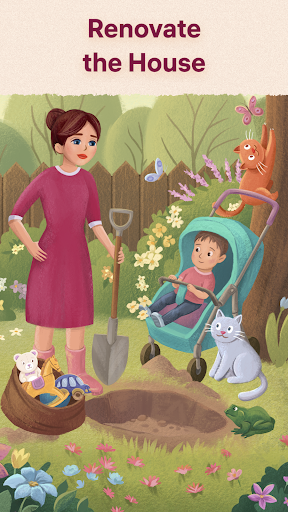

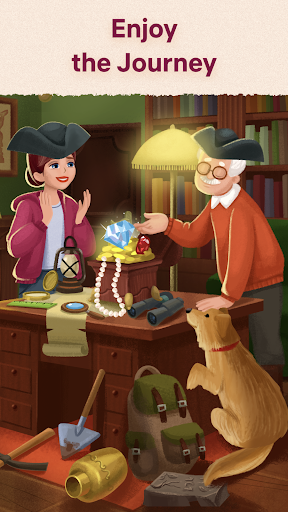


App icon and screenshots © Easybrain or the applicable rights holders. Displayed in limited form for identification and independent review. Source: official Google Play listing.
Art Puzzle is more about visual assembly and mood than strict logic, but it earns attention for readers who like puzzles that feel calmer than timed match games.
Players who enjoy image reconstruction, gentle pacing, and a puzzle app that can work as a quiet break.
Readers who want hard deduction, competitive scoring, or puzzles where every move has a clear logical consequence.
It broadens the Puzzle shelf beyond tiles and numbers while still asking readers to notice shape, placement, and visual relationships.
Verify whether later puzzles remain accessible without heavy ad interruptions or locked content.
Art Puzzle sits in the quieter corner of the Puzzle category. It is not trying to be Sudoku, and it should not be reviewed as if every move needs a formal logical proof. The appeal is visual assembly: placing pieces, rebuilding an image, and getting a satisfying reveal. The useful question is whether its visual routine still gives readers something distinct from yet another match game.
A visual puzzle depends heavily on atmosphere. If a player is using the app to relax, the timing of ads and locked content matters more than it might in a louder arcade game. Recent reviews should be checked for whether interruptions happen between puzzles or during the flow. The app can be a good decompression tool only if the business layer does not constantly break the calm pace that the screenshots appear to promise.
The strongest audience is someone who likes pattern placement, illustration, and completion. It can work well for readers who find number puzzles too dry or matching games too mechanical. It also gives the Puzzle category a softer option for people who use brain-training apps as a break rather than a challenge. That value is real, but it is not the same as deep strategy. The review should be honest about the difference.
If the reader wants a harder reasoning task, Sudoku or Water Sort will probably fit better. If they want a polished image-building routine, Art Puzzle is more relevant than Tile Club. The screenshots deserve a slow look because art style is not a minor detail here. If the compositions feel appealing and readable on a phone, the app has a good chance of working. If the visuals feel cluttered or repetitive, the rating alone should not persuade the reader.
The app has to make placement feel intentional. If pieces slide into obvious places without any real search, the experience becomes passive decoration. If the scenes require noticing silhouettes, layers, and negative space, the player gets a legitimate observation exercise. That is the detail readers should look for in reviews and screenshots. Art Puzzle is worth trying when the art style and interaction both ask for attention, not when the app only uses pretty images as a reward screen.
Art Puzzle - Jigsaw Art Games exposes Google Play screenshots in the public listing data. The review uses those images to judge readability, interface density, and whether the advertised experience is clear before a reader leaves for the store.
The public record used here is last updated 2026-02-19, with version 4.9.0. This context frames the review, but it does not replace the page's install cautions or comparison notes.
Art Puzzle - Jigsaw Art Games is compared against nearby LogicAppGuide picks in Puzzle, so the recommendation answers a reader-fit question instead of repeating a store ranking.
For Puzzle readers, the review focuses on whether the app's main loop is distinct, readable on a phone, and still worth checking after ads, hints, or purchases are considered.
Art Puzzle sits in a softer corner of the puzzle category. The decision is less about challenge density and more about whether the app gives enough visual satisfaction to justify repeated sessions.
That makes the screenshots unusually important. If the art style looks too busy or too similar across levels, the app may wear thin even when public feedback looks positive. If the compositions are readable and varied, it can be a better fit than another match-3 clone.
We include it because many readers use brain-training apps for decompression, not only difficulty. It is a good candidate when the goal is observation and completion rather than pressure.
Review basis: Google Play listing metadata, screenshots, public rating signals, store feature claims, and LogicAppGuide category comparison.
Art Puzzle - Jigsaw Art Games sits in a softer corner of the puzzle category. It is not a strict logic test, and that is not a defect. The app's listing describes a blend of jigsaw placement, hidden pictures, and relaxing art scenes, which means its value depends on mood, visual clarity, and whether the act of assembling images stays satisfying after the first few rounds. It should be reviewed as an observation puzzle, not as a Sudoku replacement.
The appeal is easy to understand. Many people want a puzzle app that helps them slow down rather than one that pushes them into speed, streaks, or competition. Art Puzzle offers a different kind of attention: noticing silhouettes, matching pieces to a scene, discovering how an image comes together, and enjoying the reveal. That can be meaningful casual play. It exercises visual search and spatial fit without asking the player to memorize rules or manage a complex board state.
Easybrain's large audience signal and strong rating footprint suggest that the app has broad mainstream appeal. The listing's emphasis on aesthetic experience is also important because art style is not secondary here; it is the product. In a number puzzle, ugly menus can be tolerated if the logic is strong. In Art Puzzle, the visuals are part of the reason to open the app. Readers should inspect screenshots more carefully than usual. If the illustrations feel calming and readable, the app has a good chance of fitting. If the art feels too busy, too similar, or too decorative for your taste, the core loop may not carry the experience.
The strongest use case is decompression. Art Puzzle is a reasonable pick for readers who want something less mechanical than tile matching and less mentally demanding than a classic number puzzle. It can work well before bed, during a quiet break, or for players who enjoy the feeling of completing a picture. It is also likely to appeal to people who like coloring apps, jigsaw puzzles, hidden-object scenes, or casual design games, but who want a shorter mobile format.
The weakness is that the challenge may not feel deep enough for every player. If pieces are too obvious, the experience becomes passive. If the app relies too heavily on repeated scene structures, novelty fades. If the later levels are tuned around hints or locked content, the relaxing promise can start to feel transactional. The listing includes an in-app purchase item, so readers should check recent reviews for ad timing, content locks, and whether free play remains smooth beyond the early puzzles.
Art Puzzle's best moments should make the player feel observant. The ideal board gives just enough uncertainty to make placement satisfying: a shape suggests a roofline, a color belongs to a background layer, or an object only makes sense after another piece is placed. That is different from simply dragging obvious shapes into obvious holes. A good review has to make that distinction because both versions can look similar in screenshots.
Compared with Tile Club, Art Puzzle is less about quick recognition and more about visual assembly. Compared with Water Sort Puzzle, it has less strategic pressure. Compared with Sudoku, it is much lighter as a logic exercise. But that lightness is exactly why some readers will prefer it. Not every puzzle app needs to be difficult; some need to be visually satisfying and calm. The important thing is to describe the value honestly rather than inflate it into serious brain training.
The app is not ideal for players who want competitive scoring, deep planning, fast feedback, or a puzzle where each move has a precise logical consequence. It is also not the best fit for someone who dislikes ad-supported casual apps or who becomes impatient with repeated visual themes. The best reader is someone who enjoys the process of revealing an image and does not need the app to prove intellectual difficulty every minute.
Before installing, check three details. Look at the screenshots and decide whether the art style actually appeals to you. Read recent reviews for comments about ads, locked pictures, and puzzle repetition. Confirm whether the free experience includes enough content to sample the app properly. If those checks are positive, Art Puzzle is a worthwhile calm-puzzle candidate. It broadens the LogicAppGuide puzzle shelf by offering observation and atmosphere instead of another match or number grid.
The manual question for Art Puzzle is whether the artwork actually creates a puzzle, or only a pleasant reveal. This matters because visual apps can look rich in screenshots while giving the player very little to decide. I would look for scenes where placement, layering, and negative space are visible enough that a reader can imagine the solving process before installing. If every screenshot looks like a finished illustration with no clear interaction, the page should stay cautious.
The best reader is someone who wants observation practice without the pressure of timers or strict deduction. Before installing, check whether recent reviews mention repeated scenes, locked images, or ads between reveals. Art Puzzle can be a good decompression pick when the visual work feels varied and the interruptions stay out of the assembly flow. It is weaker when the app turns calm image-building into a reward loop.