Best for
Players who want readable battles, quick tactical decisions, and a game that still feels understandable after a break.
Curated brain-training & logic apps for Android


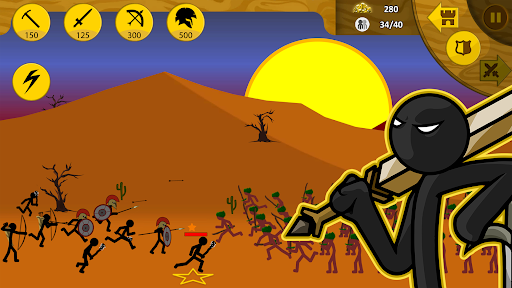
App icon and screenshots © Max Games Studios or the applicable rights holders. Displayed in limited form for identification and independent review. Source: official Google Play listing.
Stick War: Legacy remains a strong strategy pick because the player is constantly choosing between economy, unit timing, and pressure rather than only collecting upgrades.
Players who want readable battles, quick tactical decisions, and a game that still feels understandable after a break.
Readers who want peaceful strategy, realistic visuals, or a purely puzzle-like experience.
It is a useful benchmark for action-leaning strategy games where planning and timing matter in the same session.
Review recent comments for balance changes, ad load, and whether progression feels grindy in the current version.
Stick War: Legacy is valuable because the player has visible decisions under pressure. Mining, unit timing, formation, defense, and attack all compete for attention. That gives the app a stronger strategic core than games where the best move is simply waiting for upgrades to finish. The stick-figure presentation is simple, but the decision loop is not empty. A reader can usually tell why a battle failed and what to change next.
This is not a calm brain-training app. It has combat, pressure, and a more aggressive rhythm than puzzle or board picks. That does not make it a bad strategy recommendation, but it narrows the audience. Readers looking for quiet logic should move toward Sudoku, chess, or tower defense. Readers who want tactical feedback in short battles are more likely to enjoy what Stick War offers.
The public listing context shows recent maintenance, which is encouraging for an older mobile classic. The caution is progression. Strategy games can start with meaningful decisions and slowly become grind-heavy. Recent reviews should be checked for balance changes, currency pressure, and whether missions still reward better choices rather than only more upgrades.
Kingdom Rush asks the player to prepare defenses before waves arrive. Grow Empire leans harder into building strength over time. World Conqueror 4 slows the experience into campaign planning. Stick War sits closer to action strategy: readable, immediate, and reactive. LogicAppGuide should recommend it to players who want decisions inside the battle, not to readers who want peaceful planning or abstract puzzle logic.
The most useful thing to watch in Stick War is what happens after failure. If a lost battle makes the player think about economy timing, unit mix, or when to control a unit directly, the app is doing strategy work. If failure mainly points toward grinding upgrades or watching rewards, the value drops. That is why recent balance comments matter. The recommendation stays strong only while the game teaches tactical correction instead of simply extending play time.
Stick War: Legacy exposes Google Play screenshots in the public listing data. The review uses those images to judge readability, interface density, and whether the advertised experience is clear before a reader leaves for the store.
The public record used here is last updated 2026-02-19, with version 2026.1.476. This context frames the review, but it does not replace the page's install cautions or comparison notes.
Stick War: Legacy is compared against nearby LogicAppGuide picks in Strategy, so the recommendation answers a reader-fit question instead of repeating a store ranking.
For Strategy readers, the review focuses on whether the app's main loop is distinct, readable on a phone, and still worth checking after ads, hints, or purchases are considered.
The reason this belongs in a logic-and-strategy review set is not the theme; it is the decision loop. Good runs ask you to balance mining, unit mix, defense, and attack timing with enough feedback to understand why a battle turned.
That makes it different from idle strategy games where the optimal move is often just waiting for resources. Here, a reader can reasonably expect short tactical sessions that still reward attention.
The caveat is tone and repetition. Anyone looking for calm brain training should choose a board, word, or puzzle title instead.
Review basis: Google Play listing metadata, screenshots, public rating signals, store feature claims, and LogicAppGuide category comparison.
Stick War: Legacy is still one of the more useful Android strategy references because the player is not only collecting upgrades or waiting for timers. The listing describes a battle loop built around miners, sword units, spear units, archers, mages, giants, formations, and direct unit control. That combination gives the game a readable tactical identity: economy and combat happen at the same time, and the player must decide when to build, defend, pressure, and commit.
The stick-figure art style can make the game look simpler than it is. What matters is that decisions are visible. If you spend too much on miners, the enemy can pressure you before your army is ready. If you build only one unit type, you may lack the flexibility to answer different threats. If you attack too early, you may lose momentum; if you wait too long, the opponent can grow stronger. A good mobile strategy game teaches these tradeoffs through play, and Stick War has always had a strong reputation for doing that in a compact format.
This is not a peaceful logic app. The content rating is Teen, and the tone is combat-focused. That does not make it unsuitable for a strategy shelf, but it does narrow the audience. A reader looking for quiet planning should probably start with chess, Sudoku, or Kingdom Rush. Stick War is better for someone who wants pressure, short battles, and the satisfaction of changing tactics after a failed run. It has more urgency than a board game and more direct control than many tower-defense titles.
The strongest part of the recommendation is the mix of economy and timing. Mining gold is not glamorous, but it creates the strategic tension. Every coin spent on a worker is a coin not spent on immediate defense. Every unit trained has an opportunity cost. Because the battlefield is simple and the factions are visually clear, the player can usually understand why a battle turned. That kind of feedback is valuable. It keeps the game from becoming a pure upgrade checklist.
The modern mobile version still needs current scrutiny. The app has a very large install base, millions of ratings, and recent maintenance in the project data, which are encouraging signals. But strategy games can change significantly through balance updates, ad placement, event systems, and progression tuning. The listing includes in-app purchases across a very wide price range, so readers should check recent reviews for grind, reward pressure, and whether campaigns or missions still feel fair without spending. A strong lifetime rating does not guarantee that the current new-player experience is equally generous.
Stick War also has a different failure mode from calm puzzle apps. In Sudoku, bad monetization interrupts concentration. In Stick War, bad monetization can distort the strategy itself. If upgrades become more important than smart unit control, the game loses its best argument. If ads appear after natural mission breaks, many players will tolerate them; if prompts constantly interrupt retry momentum, the tactical learning loop suffers. This is why recent user comments about balance are more important than generic praise.
Compared with Kingdom Rush, Stick War is more active and reactive. Kingdom Rush asks the player to place defenses and prepare for waves; Stick War asks the player to manage an army while the fight is happening. Compared with Grow Empire: Rome, it has more immediate battlefield agency. Compared with World Conqueror 4, it is much faster and less map-heavy. That makes Stick War the right pick for players who want strategy under pressure rather than long-form planning.
It is not the best choice for readers who dislike combat themes, want realistic visuals, or prefer a slower game with no twitch element. It is also not the deepest grand-strategy experience on Android. Its strength is accessibility: the player understands the conflict quickly, learns the unit roles, and sees the consequences of timing. For many mobile players, that is a more realistic daily strategy habit than a complex campaign map.
Before installing, readers should verify three things. First, do recent reviews say progression still rewards better tactics rather than only stronger upgrades? Second, are ads and rewards placed between battles instead of inside the decision loop? Third, does the combat tone fit the player or household? If those checks pass, Stick War: Legacy remains a strong action-strategy recommendation and a useful benchmark for games that claim to mix tactics with quick mobile sessions.
Stick War should be evaluated through the clarity of its losses. A strategy game can be tense and simple-looking while still offering meaningful choices, but only if the player can understand why a push failed. The most useful signals are whether mining timing, unit composition, defense, and direct control visibly change battle outcomes. If every setback feels like a currency gate, the strategic value is weaker than the game's reputation suggests.
This is also a tone filter. Readers looking for calm brain training should probably choose Sudoku, chess, or a board puzzle instead. Stick War fits players who want short battles where economy and timing matter under pressure. Before installing, check current reviews for balance changes, ad load, and whether progress still rewards better decisions rather than repeated grinding.