Source check
Ratings, screenshots, version and install tier are treated as public store signals, not as a LogicAppGuide endorsement.
Curated brain-training & logic apps for Android

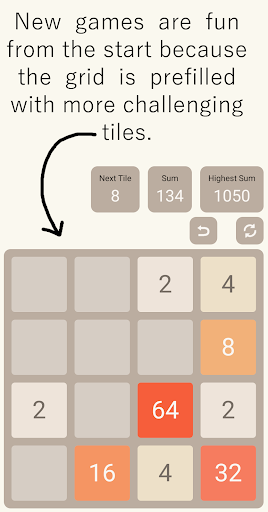
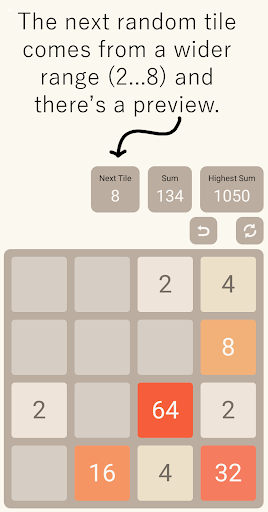
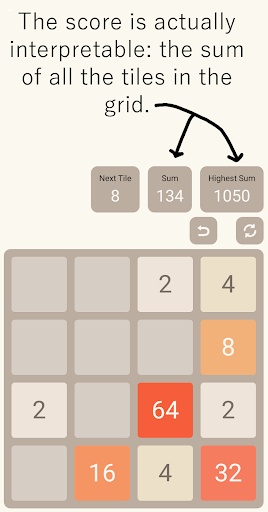
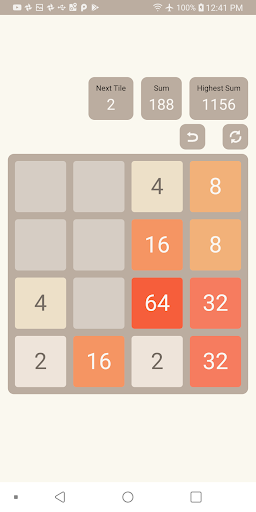
2048/3: Improved Hybrid Puzzle is covered in the LogicAppGuide Android app library as a Puzzle app. Use this page to compare fit, screenshots and public signals, while the official Google Play listing remains the source for installation decisions.
For the Puzzle category, LogicAppGuide looks for a clear use case: what problem the app solves, how quickly a reader can judge fit, and whether its screenshots and public signals make sense beside nearby picks.
Its 4.9 star average is a strong public signal, but the most useful check is whether recent reviewers still mention stable performance, fair pacing and acceptable ad load.
The visible update date is 2026-01-09. Treat that as a maintenance clue, then confirm on Google Play because version notes, compatibility and permissions can change after this page is generated.
Before opening the official listing for 2048/3: Improved Hybrid Puzzle, compare the screenshots with your actual use case and check whether the developer, pricing model and permission requests match what you expect from this type of app.
Ratings, screenshots, version and install tier are treated as public store signals, not as a LogicAppGuide endorsement.
Use the official listing to confirm permissions, current pricing, compatibility and the newest user reviews.
Review basis: Google Play listing metadata from public/dataJson/Puzzle.json, store description claims, public rating and install signals, and LogicAppGuide puzzle category comparison.
2048/3: Improved Hybrid Puzzle is the kind of small Android puzzle app that can be easy to overlook beside giant casual games with millions of installs. Its metadata is modest: more than 1,000 installs, 22 ratings, 5 reviews, and a 4.909091 score. That rating looks excellent, but the sample size is tiny, so it should be read as a positive early signal rather than proof of broad appeal. The more interesting signal is the description itself. Alan Robinson presents the app as a lean, offline, no-annoying-ads hybrid of 2048 and 3s, adjusted to be fun from the start and to require different techniques from either source game.
That is a compact but meaningful promise. 2048-style games are easy to clone badly. The basic idea of sliding tiles and merging values is famous enough that many versions add almost nothing beyond different colors or ad placement. 2048/3 claims to change the feel of the decision space. It is not just "2048 again." It is trying to borrow the approachable swipe-and-merge rhythm while changing the early game and strategy profile.
The phrase "fun from the start" is important because classic 2048 can have a slow opening. Experienced players often spend the early phase building a corner structure almost automatically before the board becomes interesting. If 2048/3 really tightens the opening, it may suit players who enjoy the core merge logic but dislike repetitive setup. A good hybrid should make every swipe feel more consequential earlier, without becoming random or unfair.
The reference to 3s also tells experienced puzzle players what to expect: not necessarily the exact same rules, but a more deliberate sliding-tile rhythm where tile relationships and board flow matter. In 2048, a common beginner strategy is to keep the largest tile in a corner and avoid disrupting the stack. A hybrid can complicate that by changing merge values, spawn behavior, or reward timing. The listing says it requires different techniques to win than either 2048 or 3s, which is exactly the kind of claim that will interest people who have already solved the usual 2048 loop.
The strongest part of the app's positioning is its anti-bloat stance. The store description says no annoying ads, runs without internet connection, no tracking, no questionable permissions, and no oversized download. In the current casual puzzle market, that is not a small thing. Many puzzle apps are mechanically decent but wrapped in ad layers, event calendars, daily currencies, and data collection. 2048/3 appears to make restraint part of its identity. For players who want a clean logic toy rather than a platform of incentives, that may be the main reason to install it.
There is still an in-app purchase signal, with a range from $0.09 to $29.49 per item. Because the listing emphasizes no annoying ads and no questionable behavior, I would expect purchases to be optional support, upgrades, or small conveniences rather than a heavy consumable economy. But the metadata alone cannot confirm that. Readers should check the current Play Store page or recent comments if monetization sensitivity is a deciding factor. The good news is that a sliding tile puzzle does not naturally need booster items; if the design is clean, the player's skill should be the whole progression system.
The audience for 2048/3 is narrower than the audience for most apps in this batch. It is probably not the best first puzzle app for someone who just wants colorful relaxation. It is better for people who already know 2048, have opinions about it, and are curious about a sharper variation. It may also fit players who like puzzle games that can be played indefinitely without levels, story, or reward screens. A good sliding tile board becomes a self-contained ritual: swipe, read the board, protect space, recover from a mistake, and chase a cleaner structure.
The small install base cuts both ways. On one hand, there is less community proof, fewer written reviews, and less certainty about device compatibility. On the other hand, small independent puzzle apps often preserve a clear design philosophy because they are not trying to serve every casual player at once. 2048/3 sounds like one of those apps: compact, opinionated, and built around a specific improvement rather than a content treadmill.
Compared with 15 Puzzle, this is less traditional and more experimental. Compared with SortPuz, it is less visual and more numerical. Compared with Brainium Sudoku, it is much lighter in features but potentially cleaner in daily use. It is not competing on level count, graphics, or social systems. It is competing on whether a familiar mechanic can be made fresher and less bloated.
My verdict is that 2048/3: Improved Hybrid Puzzle is worth attention from serious casual-puzzle players, especially those tired of ad-heavy 2048 clones. The rating is promising but too small to treat as definitive. The description, however, is unusually focused: offline, lean, no tracking, no oversized download, and a genuine rules tweak. If you want a polished content-rich puzzle hub, look elsewhere. If you want a small sliding-tile brain exercise that respects your time and may force you to unlearn standard 2048 habits, Alan Robinson's app sounds like a thoughtful install.