Source check
Ratings, screenshots, version and install tier are treated as public store signals, not as a LogicAppGuide endorsement.
Curated brain-training & logic apps for Android


World War Clash: Strategy Game is covered in the LogicAppGuide Android app library as a Strategy app. Use this page to compare fit, screenshots and public signals, while the official Google Play listing remains the source for installation decisions.
For the Strategy category, LogicAppGuide looks for a clear use case: what problem the app solves, how quickly a reader can judge fit, and whether its screenshots and public signals make sense beside nearby picks.
Its 4.4 star average suggests the basic experience works for many users, but mixed recent reviews can reveal problems hidden by an all-time score.
The visible update date is 2026-01-13. Treat that as a maintenance clue, then confirm on Google Play because version notes, compatibility and permissions can change after this page is generated.
Before opening the official listing for World War Clash: Strategy Game, compare the screenshots with your actual use case and check whether the developer, pricing model and permission requests match what you expect from this type of app.
Ratings, screenshots, version and install tier are treated as public store signals, not as a LogicAppGuide endorsement.
Use the official listing to confirm permissions, current pricing, compatibility and the newest user reviews.
Review basis: Google Play listing metadata, screenshots, public rating signals, store feature claims, and LogicAppGuide category comparison.
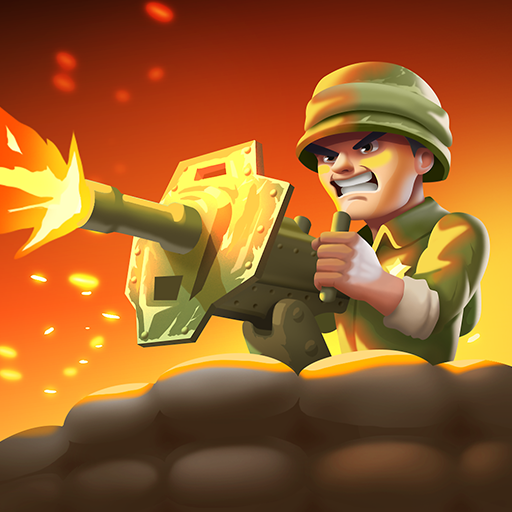
World War Clash: Strategy Game is a modern military strategy game from Hypemasters, Inc. that combines unit merging with fast real-time battles. Instead of building a base over long timers or controlling a large map, the app focuses on short sessions where players merge identical units, upgrade firepower, deploy troops, and adapt during tactical arena fights. The listing describes tanks, snipers, helicopters, missile trucks, ranked PvP, leaderboards, daily missions, rewards, and seasonal events. That places it somewhere between merge battler, auto-combat strategy, and quick PvP war game.
The core idea is easy to understand: merge identical troops to create stronger versions, then use those upgraded units in battle. Merge mechanics give progression a clear visual rhythm. Two weaker units become a stronger one, stronger units improve the squad, and the player's army gradually becomes more dangerous. The strategic question is how those merged units are used. A tank may provide durability, a sniper may punish key targets, a helicopter may offer mobility or air damage, and a missile truck may deliver area pressure. The game becomes more interesting if unit types truly have different roles rather than simply higher numbers.
The real-time battle structure is the main appeal. The listing emphasizes positioning forces, timing deployments, and adapting mid-battle. That is more active than a pure merge puzzle. A player must decide not only what to upgrade, but also when to commit a unit and how to respond to the opponent's composition. Short matches are a good fit for mobile because they allow meaningful action without requiring a long session. If each fight lasts only a few minutes, the app can work well for quick competitive play.
The modern military theme gives the game a clear identity. Tanks, infantry, helicopters, missiles, deserts, and urban zones create an immediately readable battlefield style. The Everyone 10+ rating is worth noting because the subject is warfare, even if the presentation is likely stylized rather than graphic. Parents should treat it differently from an abstract puzzle app. The content may be suitable for older children under the rating, but it is still themed around military conflict and combat.
The PvP and leaderboard systems are a major part of the promise. Ranked modes can give players a reason to keep improving their army and tactics, while global leaderboards create long-term goals. This can be exciting for competitive players, but it also raises balance questions. In any PvP game with merging, progression, rewards, and purchases, fairness matters. If paid upgrades or premium resources create a major advantage, battles may feel less skill-based. If matchmaking and progression are balanced well, the merge-and-battle loop can remain rewarding.
The public rating evidence is positive but limited. World War Clash shows a score around 4.35 with 198 ratings and 5,000+ installs. That suggests the early response is decent, but the sample is small. It is not yet a heavily proven strategy title with hundreds of thousands of reviews. Players should treat the app as a developing or smaller-scale game with a clear concept and some early traction. The January 13, 2026 update date is encouraging because competitive games need ongoing balance updates, bug fixes, and event support.
Monetization is the biggest caution. The metadata lists in-app purchases from $0.99 to $99.99 per item. In a PvP strategy game, this matters more than in a solo puzzle. Purchases may relate to unit progression, currency, event rewards, or upgrade acceleration. A high purchase ceiling can be acceptable if spending is optional and matchmaking accounts for power levels, but it can become frustrating if paying players gain overwhelming battlefield advantages. Anyone who is sensitive to pay-to-progress systems should inspect early progression carefully before investing time.
Compared with traditional real-time strategy games, World War Clash is much more compact. There is no indication of deep base building, resource harvesting, or long-form map control. Compared with merge games, it adds tactical deployment and PvP pressure. Compared with auto-battlers, it may offer more direct timing and positioning decisions if the battles allow active control. The best audience is players who want short military-themed strategy matches with clear upgrade feedback and competitive progression.
The game may be less appealing to players who want slow, thoughtful strategy with diplomacy, economy, or large armies. It is also not ideal for people who dislike PvP pressure or leaderboards. The listing's "fast sessions, big action" promise is the clearest signal: this is built for quick clashes, not extended campaigns. Daily missions and seasonal events may add structure, but they can also create routine pressure if the rewards are too important.
The main design risk is balance. Unit merging must feel meaningful without making early units useless too quickly. PvP must reward tactics without turning into pure power comparison. Events must provide goals without overwhelming casual players. Another risk is clarity in battle. Modern military visuals can become busy, so players need to understand which unit is doing what and why a fight was won or lost.
Overall, World War Clash: Strategy Game looks like a promising merge-and-battle strategy Android app with a clear modern war theme and fast PvP focus. Its strengths are short matches, unit merging, varied military roles, ranked competition, recent updates, and a straightforward combat premise. Its cautions are the small public rating sample, high-end in-app purchases, and the importance of PvP balance. If you like quick tactical battles and merge progression, it is worth testing. If you want a mature, deeply reviewed strategy ecosystem or a non-monetized competitive field, approach it with realistic expectations.