Source check
Ratings, screenshots, version and install tier are treated as public store signals, not as a LogicAppGuide endorsement.
Curated brain-training & logic apps for Android


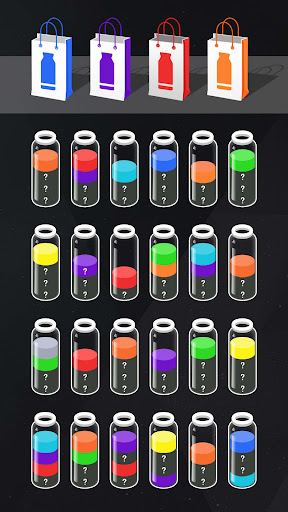


Water SortPuz 3D: Color Sort is covered in the LogicAppGuide Android app library as a Puzzle app. Use this page to compare fit, screenshots and public signals, while the official Google Play listing remains the source for installation decisions.
For the Puzzle category, LogicAppGuide looks for a clear use case: what problem the app solves, how quickly a reader can judge fit, and whether its screenshots and public signals make sense beside nearby picks.
Its 4.9 star average is a strong public signal, but the most useful check is whether recent reviewers still mention stable performance, fair pacing and acceptable ad load.
The visible update date is 2026-02-26. Treat that as a maintenance clue, then confirm on Google Play because version notes, compatibility and permissions can change after this page is generated.
Before opening the official listing for Water SortPuz 3D: Color Sort, compare the screenshots with your actual use case and check whether the developer, pricing model and permission requests match what you expect from this type of app.
Ratings, screenshots, version and install tier are treated as public store signals, not as a LogicAppGuide endorsement.
Use the official listing to confirm permissions, current pricing, compatibility and the newest user reviews.
Review basis: Google Play listing metadata, screenshots, public rating signals, store feature claims, and LogicAppGuide category comparison.
Water SortPuz 3D: Color Sort belongs to a very specific puzzle niche: the water-sorting game where the player pours colored liquid between bottles until each container holds one clean color. The appeal is easy to understand. It combines logic, neat visual feedback, and a low-pressure rhythm that can feel almost meditative. For a LogicAppGuide review, the question is not whether water-sort puzzles are popular. The better question is whether this listing gives enough evidence that the app handles clarity, pacing, and difficulty in a way that respects the player's attention.
The public signals are strong. This snapshot lists more than 5 million installs, a 4.9 star average, and nearly 119,000 ratings. That is a substantial base for a puzzle app built around one core mechanic. A score that high usually means the early experience is easy to enter and satisfying for a broad casual audience. Still, water-sort games can be deceptive: the first stages often feel effortless, while later levels may become either genuinely strategic or artificially blocked by limited moves, extra tubes, ads, and booster pressure. The rating should encourage a closer look, not replace it.
The developer description emphasizes "logic-based brainteaser mechanics," "3D water color sort," and systematic problem solving. That is the right promise for this kind of game. A good water-sort puzzle should make every pour feel intentional. The player should be able to inspect the bottle stack, predict consequences, undo or restart without confusion, and recognize why a level failed. If the app turns mistakes into learning, it becomes a calm logic exercise. If it hides the board under effects or constantly pushes paid help, the puzzle value weakens quickly.
The screenshot count is useful here because visual design is unusually important for sorting games. The colors must be distinct, especially on small screens and for players who may struggle with similar shades. Bottle shapes, fill levels, and tap targets need to be readable at a glance. The 3D presentation can make the game feel polished, but it should not reduce clarity. Before installing, I would inspect whether the screenshots show actual gameplay boards, how many colors appear at once, and whether the interface leaves enough space around the bottles for comfortable tapping.
Water SortPuz 3D is best for players who like slow logical sequencing more than speed. It is a poor fit for someone who wants narrative, competition, or complex puzzle variety. The main satisfaction is in organizing disorder: moving one layer at a time, creating temporary space, and eventually watching the board resolve. That can be very pleasant during a commute or short break because the rules are simple and the goal is visible. The app's value depends on whether it preserves that clean rhythm as the level count grows.
The listing shows in-app purchases from $1.99 to $39.99 per item. That does not automatically make the game aggressive, but it is important context. Sorting games often monetize through undo options, hints, extra tubes, ad removal, or bundles of boosters. A fair version lets a patient player solve levels through planning. A less fair version makes later boards feel designed around paid escape routes. Recent reviews are the best way to tell which direction the current version has taken.
The update date in the local data is February 26, 2026, which suggests current maintenance. For a puzzle app, maintenance can mean new levels, performance fixes, or ad network changes. Readers should check whether recent reviews still mention smooth play, readable colors, and reasonable ad pacing. It is also worth looking for device-specific complaints, because a game that relies on tap precision and visual contrast can feel different across screen sizes.
Compared with broader match-3 games, Water SortPuz 3D has a narrower and cleaner promise. It does not need characters, story events, or many modes to work. Its success depends on execution: clear colors, fair level design, quick restarts, and minimal interruption between attempts. That narrower focus is a strength if the player wants a quiet brain teaser. It becomes a weakness only if the app pads the experience with too much reward noise.
My practical verdict is positive but conditional. Water SortPuz 3D: Color Sort looks worth checking for readers who enjoy sorting puzzles and want a polished, actively maintained version with a large public rating base. Before installing, verify the current ad load, purchase pressure, color readability, and whether recent users say higher levels remain solvable without constant boosts. If those checks look good, this is a strong candidate for a calm, logic-first puzzle habit.


