Source check
Ratings, screenshots, version and install tier are treated as public store signals, not as a LogicAppGuide endorsement.
Curated brain-training & logic apps for Android

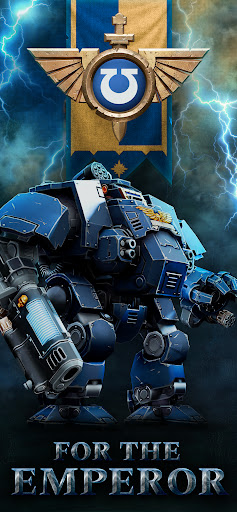
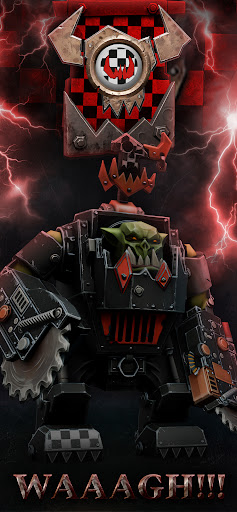


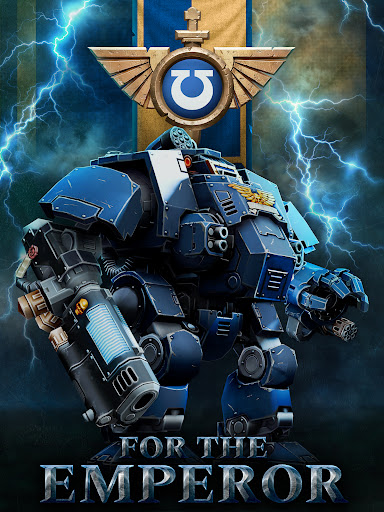

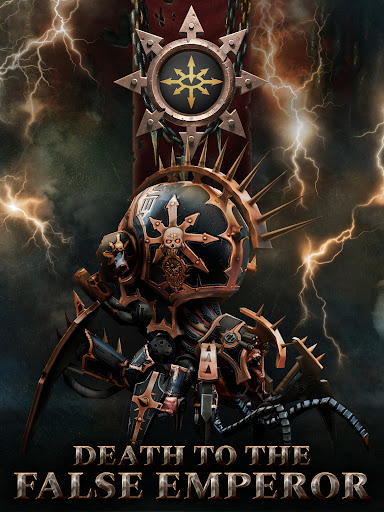


Supremacy: Warhammer 40,000 is covered in the LogicAppGuide Android app library as a Strategy app. Use this page to compare fit, screenshots and public signals, while the official Google Play listing remains the source for installation decisions.
For the Strategy category, LogicAppGuide looks for a clear use case: what problem the app solves, how quickly a reader can judge fit, and whether its screenshots and public signals make sense beside nearby picks.
Its 0.0 star average deserves extra caution; read recent low-star reviews before spending time with it.
No clear update date is shown in this public data snapshot, so maintenance status should be checked directly on Google Play before relying on the app.
Before opening the official listing for Supremacy: Warhammer 40,000, compare the screenshots with your actual use case and check whether the developer, pricing model and permission requests match what you expect from this type of app.
Ratings, screenshots, version and install tier are treated as public store signals, not as a LogicAppGuide endorsement.
Use the official listing to confirm permissions, current pricing, compatibility and the newest user reviews.
Review basis: Google Play pre-registration listing metadata and description from public/dataJson/Strategy.json; no hands-on device test.
Supremacy: Warhammer 40,000 is unusual in this review set because the local metadata reads like a pre-registration listing rather than a fully launched Android game. There is no public rating, no ratings count, no install count, no source update timestamp, and no active IAP price range in the scraped fields. That means this review has to be more careful than a normal app review. The useful question is not "Is the live economy fair after dozens of hours?" The honest question is "What does the listing promise, what kind of player is it for, and what should people verify once the game is live?"
The promise is very clear. Stillfront Supremacy GmbH is taking the long-form multiplayer strategy structure associated with Supremacy and placing it inside the Warhammer 40,000 universe. The listing names Vigilus, the Nachmund Gauntlet, planetwide domination, 30 or 64-player maps, economic control, military strength, alliances, diplomacy, and campaigns that evolve over days or weeks. This is not a small squad tactics game, a hero collector, or a quick base defense app. It is pitched as a persistent planetary war where player decisions unfold slowly and where diplomacy can matter as much as battlefield force.
The Warhammer 40,000 setting is doing a lot of work. The four launch factions listed locally are Space Marines, Chaos Space Marines, Orks, and Astra Militarum. Those factions are not interchangeable flavor labels. A good Warhammer strategy game needs them to feel different in tempo, military identity, and fantasy. Space Marines should feel elite and disciplined. Chaos Space Marines should feel brutal, corrupting, and dangerous. Orks need momentum, numbers, and reckless pressure. Astra Militarum should communicate massed firepower, vehicles, and grim human endurance. The listing does not provide enough mechanical detail to confirm that these differences are deep, but faction personality will be one of the first things players should judge.
The match scale is the other major hook. Thirty-player and 64-player maps suggest something much closer to a grand multiplayer board war than a phone-sized skirmish. In a days-or-weeks structure, the drama comes from timing and relationships. You expand, scout, negotiate, reinforce borders, choose when to expose your army, and decide whether an alliance is a temporary convenience or a path to shared victory. That design can create memorable stories because human players do surprising things. It can also create frustration because human players attack while you are offline, betray deals, or form coalitions that make a region feel unwinnable.
Players familiar with Supremacy: World War 3 or Supremacy 1914 will understand the expected pace. The store description explicitly says this is from the creators of Supremacy 1914 and calls it a long-term multiplayer strategy experience. That is a warning as much as a selling point. A long-term war game can be brilliant if you want to check the map daily, plan ahead, and coordinate. It is a poor fit if you want a clean offline campaign, instant battles, or a game that can be fully understood in one evening. Warhammer fans who mainly like painted armies, tactical dice, or narrative campaigns should not assume this will scratch the same itch as tabletop play.
The best audience is therefore a specific overlap: Warhammer 40,000 fans who also enjoy persistent multiplayer strategy. Lore alone is probably not enough. You need to like production, map control, diplomacy, and long consequences. Strategy fans who are not deep Warhammer readers may still enjoy the game if the faction design is readable, but the grimdark theme is central. The listing mentions the brutal battlefields of Vigilus and the deep lore of Warhammer 40,000, so the tone should be harsher than casual fantasy strategy. The content rating is Teen for Violence and Blood, which fits the franchise even if the actual presentation is likely strategic rather than graphic close-up combat.
The local metadata says the app is not ad-supported and does not contain ads, which is encouraging for a serious strategy map. Forced ads would be a poor match for slow diplomacy and war planning. Monetization is less clear. The structured field says offersIAP is false and there is no IAP range, but the description includes standard language saying the game is free to download and play and that some items can be purchased for real money. Because this appears to be a pre-registration entry, the safest interpretation is that the active store metadata did not yet expose an IAP range at scrape time, while the eventual live game may include purchases. Players should verify the current Google Play listing before treating the economy as purchase-free.
The biggest strength of Supremacy: Warhammer 40,000 is also its biggest risk: combining a beloved license with a slow multiplayer format. If the team uses the setting thoughtfully, Vigilus could become an excellent stage for tense, asymmetric faction warfare. The long match length gives campaigns room to breathe, alliances room to matter, and faction rivalries room to become stories. But if the Warhammer layer is mostly names and portraits over a generic Supremacy map, fans may be disappointed. A license this strong raises expectations for atmosphere, unit identity, faction doctrine, and readable grimdark detail.
Compared with Great Conqueror: Rome, this is less single-player and much more social. Compared with Tower Defense Kingdom Realm, it is not about lanes and waves at all. Compared with Supremacy: World War 3, it appears to offer a more fictional, faction-driven war fantasy, but likely shares the same broad patience requirement: check-ins, diplomacy, and campaigns that unfold over real time. The correct comparison is not a quick mobile tactics game. It is a large online board of competing players.
For now, Supremacy: Warhammer 40,000 is best treated as a watchlist Android app for strategy players rather than a proven recommendation. The concept is strong: Warhammer factions, planetary domination, 30 or 64-player wars, alliances, economics, and days-long campaigns. The missing rating and install data mean there is no public quality signal in the local dataset yet. If you are a Warhammer fan who already likes long-form multiplayer strategy, pre-registering or tracking launch impressions makes sense. If you want a finished, measurable Android strategy game today, wait for live reviews, monetization details, and faction balance reports before committing your time to the war for Vigilus.