Source check
Ratings, screenshots, version and install tier are treated as public store signals, not as a LogicAppGuide endorsement.
Curated brain-training & logic apps for Android
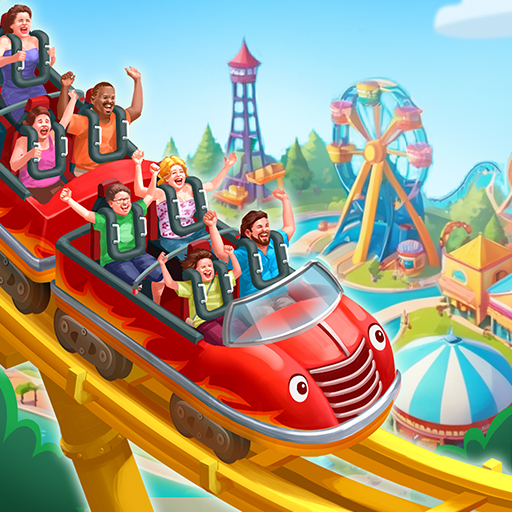


Match Carnival: Match 3 Game is covered in the LogicAppGuide Android app library as a Puzzle app. Use this page to compare fit, screenshots and public signals, while the official Google Play listing remains the source for installation decisions.
For the Puzzle category, LogicAppGuide looks for a clear use case: what problem the app solves, how quickly a reader can judge fit, and whether its screenshots and public signals make sense beside nearby picks.
Its 4.7 star average is a strong public signal, but the most useful check is whether recent reviewers still mention stable performance, fair pacing and acceptable ad load.
The visible update date is 2026-02-03. Treat that as a maintenance clue, then confirm on Google Play because version notes, compatibility and permissions can change after this page is generated.
Before opening the official listing for Match Carnival: Match 3 Game, compare the screenshots with your actual use case and check whether the developer, pricing model and permission requests match what you expect from this type of app.
Ratings, screenshots, version and install tier are treated as public store signals, not as a LogicAppGuide endorsement.
Use the official listing to confirm permissions, current pricing, compatibility and the newest user reviews.
Review basis: Google Play listing metadata from public/dataJson/Puzzle.json, store description claims, public rating and install signals, screenshot count, monetization flags, and LogicAppGuide puzzle category comparison.
Match Carnival: Match 3 Game is a puzzle and park-building hybrid from Tiny Tactics Games. Its store pitch is more ambitious than a basic candy or gem swapper: solve classic match-3 levels, unlock roller coasters, ferris wheels, water slides, and other attractions, then use progress to build out a colorful carnival. That extra construction layer is the app's clearest identity. It is not just asking whether you like matching pieces. It is asking whether you want your matching to feed a visible theme-park project.
The public signals are strong for a mid-scale casual puzzle game. The metadata shows 1,000,000+ installs, about 1.67 million real installs, a 4.653448 score, 33,707 ratings, and 2,401 written reviews. It was released in March 2020 and updated to version 1.6.0 on February 3, 2026. That combination of age and recent maintenance is encouraging. Match-3 games need continual tuning because events, boosters, economies, and difficulty curves can become stale or hostile if the developer stops paying attention.
The listing promises more than 2000 match-3 puzzles. That is enough content for a long casual run, especially when paired with a building layer. The best version of this structure gives each level a reason to matter: clear a board, collect rewards, fix or open an attraction, and watch the park become more lively. That sense of outward progress can make repeated match-3 boards feel less mechanical. Players who like decorating, restoration, or "one more task" progression are likely to find the format more compelling than a bare level list.
The park theme also changes the emotional tone. Many match-3 apps use fantasy, candy, jewels, or kitchen themes. A carnival gives the developer permission to use bright rides, mini-games, prize stalls, and exaggerated visual effects. The description mentions popping balloons and repairing rides for extra gems, which suggests the game breaks up the swap-and-clear loop with small side activities. Those mini-games do not need to be deep. Their job is to make the park feel active and to prevent the player from seeing only board after board.
Mechanically, Match Carnival appears to stay within familiar match-3 territory: challenging levels, powerful boosters, rewards, tournaments, and events. That familiarity is not a flaw. In this genre, originality often matters less than clarity, pacing, and fairness. The important questions are whether goals are readable, whether boosters feel satisfying without being mandatory, and whether level failure usually feels like a tactical mistake rather than a sales funnel. The rating base suggests many players are happy with the balance, but free-to-play match-3 apps can change over time, so recent reviews still matter.
Offline support is a meaningful plus. The listing labels it as an offline match-3 game with no Wi-Fi required. That makes it more useful for travel and quick sessions, though some features such as teams, leaderboards, tournaments, or live rewards may still depend on connection. The safest expectation is that core puzzle levels can be played offline while social and event features work best online. That distinction should be clear to users who mainly want a subway or airplane puzzle game.
The social layer is broader than in simpler match-3 apps. Match Carnival mentions teams, free lives, and leaderboards. For some players, that adds motivation and a light sense of community. For others, it adds pressure, notifications, and systems they may ignore. I see it as optional value rather than the core reason to install. The app's central appeal remains the combination of match-3 boards and park construction.
Monetization is the main caveat. Match Carnival is ad supported and offers in-app purchases from $0.99 to $99.99 per item. That is a standard but serious range for free match-3. The upper end indicates bundles or premium currency packs that can add up if a player chases events or extra moves. Adults can treat purchases as convenience; families should make sure device-level purchase controls are set. The best experience is one where a patient player can keep building the park without feeling forced into purchases after every hard level.
Compared with Jewel Aloha, Match Carnival is much more systems-heavy. It has more ratings, more installs, more described progression, and more live-service texture. Compared with Fruit Diary, it is less about fruit-blasting relaxation and more about building a themed space. Compared with Move the Block, it is less deterministic because match-3 cascades and boosters introduce luck. That makes Match Carnival better for players who enjoy rewards and decoration, and less ideal for players who want pure logic.
The 24 screenshots are important because theme-park games can oversell decoration while hiding the board. Prospective players should look for actual match-3 layouts, attraction screens, and reward pop-ups. If the board is clean and the park view feels cheerful rather than cluttered, the app's concept has a good chance to land. If screenshots show too many currencies, timers, and buttons, that may signal a busier experience.
My verdict is positive for the right audience. Match Carnival: Match 3 Game has a strong score, meaningful scale, recent updates, 2000+ advertised puzzles, offline play, and a theme-park layer that gives casual matching a sense of destination. The risks are familiar: ads, high-end IAP bundles, lives, event pressure, and possible difficulty spikes. If you like match-3 games that reward you with building progress and do not mind some free-to-play machinery, this is one of the more complete options in the assigned set.