Source check
Ratings, screenshots, version and install tier are treated as public store signals, not as a LogicAppGuide endorsement.
Curated brain-training & logic apps for Android


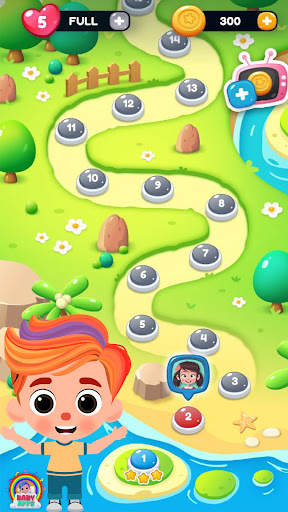

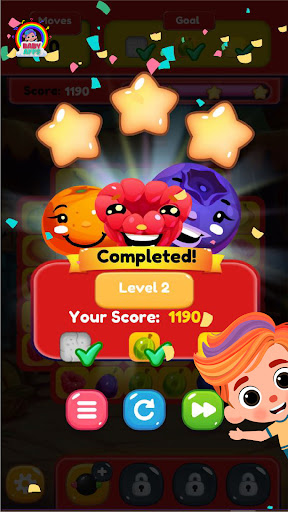


Fruit Puzzles: Match & Crush is covered in the LogicAppGuide Android app library as a Education app. Use this page to compare fit, screenshots and public signals, while the official Google Play listing remains the source for installation decisions.
For the Education category, LogicAppGuide looks for a clear use case: what problem the app solves, how quickly a reader can judge fit, and whether its screenshots and public signals make sense beside nearby picks.
Its 0.0 star average deserves extra caution; read recent low-star reviews before spending time with it.
The visible update date is 2025-10-29. Treat that as a maintenance clue, then confirm on Google Play because version notes, compatibility and permissions can change after this page is generated.
Before opening the official listing for Fruit Puzzles: Match & Crush, compare the screenshots with your actual use case and check whether the developer, pricing model and permission requests match what you expect from this type of app.
Ratings, screenshots, version and install tier are treated as public store signals, not as a LogicAppGuide endorsement.
Use the official listing to confirm permissions, current pricing, compatibility and the newest user reviews.
Review basis: Google Play listing metadata, store description claims, install count, missing public rating/review signals, monetization flags, and LogicAppGuide educational-puzzle comparison.
Fruit Puzzles: Match & Crush is an educational fruit-matching game from BabyApps.Kids, and it needs to be judged differently from a large mainstream puzzle hit. The local Google Play metadata shows 1,000+ installs and 1,534 real installs, but no public score, no ratings count, and no written review count in the scraped fields. That absence is not a minor detail. It means there is not yet enough visible community feedback in the local source to treat the app as proven. The review therefore has to lean heavily on the listing claims, developer positioning, category, monetization flags, and the practical fit for parents and young players.
The app is listed under Educational rather than standard Puzzle, which matches its description. BabyApps.Kids presents Fruit Puzzles as a game for kids and adults, with special emphasis on ages 4 and up, preschoolers, elementary learners, parents, and educators. The pitch is not simply "match fruits for points." It claims to support logic, pattern recognition, memory, visual matching, color association, object identification, vocabulary, and short-term memory. Those are plausible learning goals for a fruit-based puzzle app, provided the actual levels are paced gently and do not overload children with too many rules at once.
The listing describes several puzzle styles: match-3, shape sorting, drag-and-drop fruit boards, memory mini-games, and swipe or pair mechanics. That variety is important for an educational app. Young children often benefit from repetition, but they also lose interest quickly if every screen asks for the same action. A mix of dragging, matching, sorting, and remembering can exercise related skills without feeling like a worksheet. For adults looking for a deep puzzle challenge, this will likely be too simple. For a parent seeking low-stakes screen time with a clear visual theme, the design direction makes sense.
The strongest claim in the description is that the game is offline and distraction-free, "without ads, popups, or distractions." However, the local Google Play metadata marks the app as ad supported and `containsAds: true`. That conflict is worth calling out plainly. It may reflect a stale listing claim, a metadata mismatch, a technical classification, or an implementation where ads exist in some contexts but are not prominent. From a parent's point of view, the safest reading is the metadata: assume ads may be present until verified in the app. For a children's educational product, ad behavior is not a small concern. Popups, rewarded ads, or misleading close buttons can undermine the whole "safe for kids" promise.
The app also offers in-app purchases at $5.49 per item. The listing does not specify what the purchase unlocks. It may be a premium unlock, ad removal, more levels, or a child-friendly content pack. Since the app is aimed at young users, purchase controls are essential. A single modest IAP price is easier to understand than a wide bundle range, but parents should still check whether core activities are meaningfully usable without payment. Educational games are most trustworthy when the free path is honest about its limits.
The visual and audio framing sounds appropriate for the target audience. The description mentions bright fruit graphics, cheerful animations, and satisfying sound effects. Those details matter because preschool and early elementary puzzle apps need immediate recognition. Fruits are familiar objects, colors are easy to name, and matching fruit shapes can support vocabulary without requiring text-heavy instructions. If the images are clean and the controls are forgiving, a child can learn through action: drag the apple, group the bananas, remember the matching pair, or identify which fruit belongs in a shape slot.
The app was released on June 25, 2025, with version 1.2 updated on October 29, 2025. That timeline suggests a relatively new product with at least one post-release update. The small install count is understandable for a newer educational app, but it also means there is less evidence of long-term reliability. Parents and teachers often care about mundane things that ratings reveal over time: Does it crash? Are the instructions understandable? Does it work on tablets? Are ads appropriate? Are levels repeated too aggressively? Without ratings and reviews, those questions remain open.
As a puzzle experience, Fruit Puzzles is probably best for short guided sessions. A parent can sit with a child, name fruits, ask why two items match, or encourage the child to remember a hidden pair. That kind of co-play can make a simple app more valuable than the mechanics alone. Used as an unsupervised babysitting app, it is harder to recommend without first confirming the ad and purchase behavior. The Everyone content rating is reassuring for theme, but content rating does not fully answer monetization and attention-design concerns.
Compared with pure match-3 games, Fruit Puzzles appears more educational and less score-chasing. Compared with toddler flashcard apps, it sounds more interactive. Compared with larger kids' learning platforms, it is narrower and likely less comprehensive. That can be a strength if you want a simple fruit-themed activity rather than a full curriculum. It can be a weakness if you expect adaptive lessons, progress reports, or broad subject coverage.
My verdict is cautiously interested. Fruit Puzzles: Match & Crush has a friendly concept, a clear early-learning audience, offline claims, multiple puzzle modes, and a simple fruit theme that fits young children. But the missing rating data, small install base, ad-supported metadata, and unspecified $5.49 IAP make it a "review carefully before handing to a child" Android app. For adults, it is probably too gentle unless you specifically enjoy casual fruit matching. For parents and educators, it may be useful as a light visual matching tool, but only after checking that the real app experience matches the safety and distraction-free promises in the listing.