Source check
Ratings, screenshots, version and install tier are treated as public store signals, not as a LogicAppGuide endorsement.
Curated brain-training & logic apps for Android

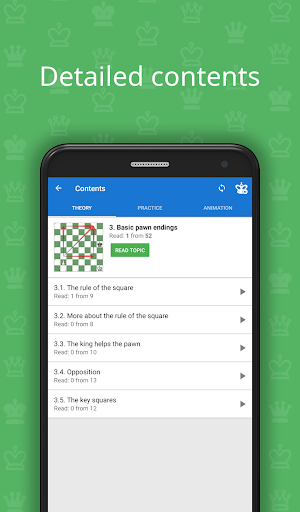
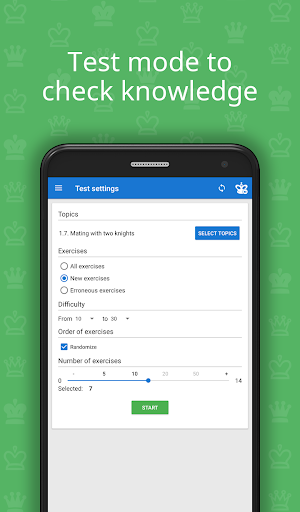
Chess Strategy for Beginners is covered in the LogicAppGuide Android app library as a Board app. Use this page to compare fit, screenshots and public signals, while the official Google Play listing remains the source for installation decisions.
For the Board category, LogicAppGuide looks for a clear use case: what problem the app solves, how quickly a reader can judge fit, and whether its screenshots and public signals make sense beside nearby picks.
Its 4.3 star average suggests the basic experience works for many users, but mixed recent reviews can reveal problems hidden by an all-time score.
The visible update date is 2025-10-29. Treat that as a maintenance clue, then confirm on Google Play because version notes, compatibility and permissions can change after this page is generated.
Before opening the official listing for Chess Strategy for Beginners, compare the screenshots with your actual use case and check whether the developer, pricing model and permission requests match what you expect from this type of app.
Ratings, screenshots, version and install tier are treated as public store signals, not as a LogicAppGuide endorsement.
Use the official listing to confirm permissions, current pricing, compatibility and the newest user reviews.
Review basis: Google Play listing metadata, app description, public rating signals, ad/IAP declarations, and board strategy category comparison.
Chess Strategy for Beginners is less a casual chess app than a structured training course wrapped in an interactive board. The local Google Play metadata lists it as a free Chess King title with 100,000+ installs, a 4.34 rating from 2,240 ratings, ads, and a paid course unlock at $11.99 per item. That context matters because this is not trying to compete with online chess lobbies or puzzle rush apps. It is a guided curriculum for people who already know how the pieces move and now need a practical bridge from "I can play a game" to "I understand why plans work."
The course scope is unusually concrete for a mobile chess listing. Chess King describes 55 lessons and more than 1,200 instructive examples and exercises, starting with checkmating a lone king and moving into opening principles, middlegame tactics, pawn endings, and the conversion of material or positional advantages. That makes the app valuable for a very specific learner: someone past the rules but not yet fluent in the basic language of chess strategy. It does not appear designed for absolute beginners who still need piece-movement drills, and it will probably feel too elementary for tournament players who already study annotated master games.
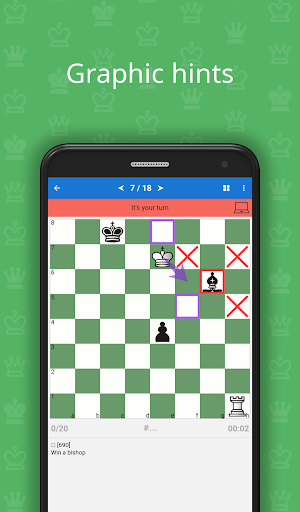
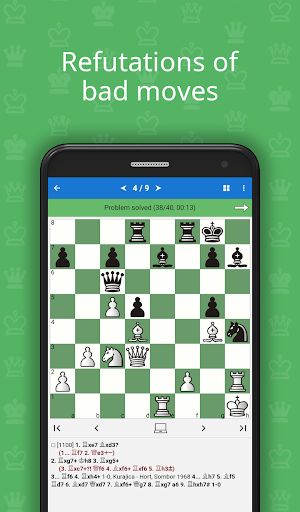
The strongest part of the design is the way the app turns lessons into board work. The description says the program acts as a coach, gives tasks to solve, asks the player to enter key moves, provides hints, and can show refutations for typical mistakes. That is a better learning loop than simply reading a chess book on a phone. In chess, the difference between understanding a concept and being able to find the move is large. A lesson on opposition, a pin, a back-rank weakness, or the rule of the square becomes more memorable when the learner must move the pieces and then see why an attractive wrong move fails.
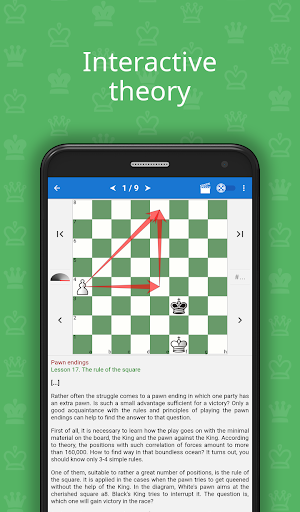
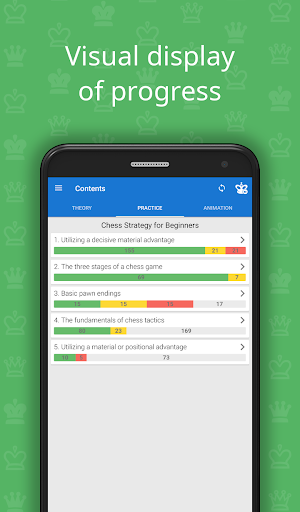
The theoretical section also sounds more interactive than a static manual. Chess King says users can read explanations, make moves on the board, and work out unclear moves inside the lesson. That is important for beginners because strategic ideas are often position-dependent. "Fight for the center" is easy to say but much harder to apply when a pawn structure changes or a minor piece has limited squares. The course's table of contents suggests a sensible progression: decisive material advantages first, then the three stages of the game, basic pawn endings, tactical fundamentals, and finally broader use of material or positional advantage.
As a training tool, Chess Strategy for Beginners has a nice balance between tactics and strategy. Many mobile chess apps lean heavily on short tactics because tactics are easy to package as bite-sized puzzles. This one still includes tactical methods such as double attacks, knight and pawn forks, discovered attacks, double check, decoys, blocking, smothered mate, distraction, and line clearance. But it also includes endgame and opening foundations, which are where many casual players actually get stuck. A beginner may win material through a tactic and still fail to convert; the listed lessons on mating with major pieces, rook mates, queen mates, bishop-and-knight mates, key squares, and opposition directly address that gap.
The app is best for disciplined learners who enjoy solving positions slowly. It is also suitable for parents or teachers who want a self-contained practice environment for a student who already knows the rules. The content rating is Everyone, and the app does not require an internet connection according to the description, so it can work well for offline study sessions. The listing also says the app can be linked to a free Chess King account so a course can be solved across Android, iOS, and web. That creates a useful split: offline practice is possible, but account linking is worth considering if you study on multiple devices.
The main limitation is that it is a course, not a full chess lifestyle app. There is no indication here of live online play, a large engine analysis suite, puzzle-rush competition, or opening database exploration. Compared with Chess.com or Lichess-style experiences, Chess Strategy for Beginners is narrower and more school-like. Compared with a tactics-only trainer, it is broader and more patient. Its value depends on whether you want curriculum. If you mainly want quick tactical entertainment, the lesson structure may feel slow. If you want a guided path through fundamentals, that structure is the point.
Monetization needs a clear note. The course includes a free part with fully functional lessons, but the listing also declares ads and an in-app purchase at $11.99 per item. That is not necessarily a problem, because a paid unlock is normal for a specialized training course, but buyers should test the free portion first. Pay attention to whether the hint system, board interaction, explanations, and text size feel comfortable on your device. Chess diagrams can become cramped on small phones, and a course with 1,200 examples asks for sustained reading and board focus.
Overall, Chess Strategy for Beginners is a focused educational Android app with a stronger teaching premise than most generic "learn chess" apps. Its best use is as a step-by-step companion for players who know the rules, lose games for unclear reasons, and want to build foundations in mate patterns, pawn endings, tactical motifs, and simple strategic conversion. It will not replace regular play or advanced analysis, but as a beginner-to-intermediate bridge it fits its title honestly. The combination of offline availability, interactive theory, mistake refutations, bookmarks, test settings, and ELO-style progress monitoring makes it a serious study tool rather than a decorative chess app with a lesson label.