Source check
Ratings, screenshots, version and install tier are treated as public store signals, not as a LogicAppGuide endorsement.
Curated brain-training & logic apps for Android

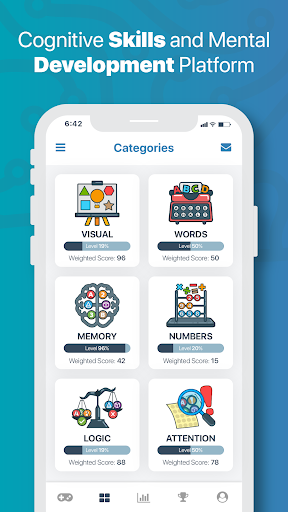
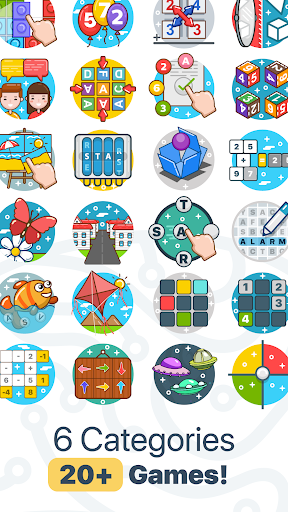
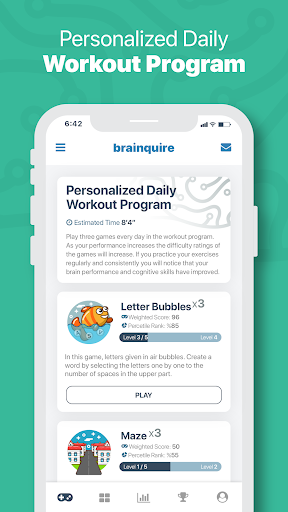

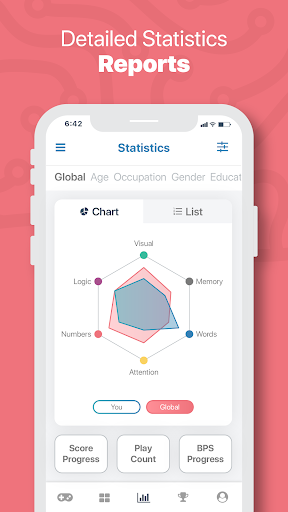
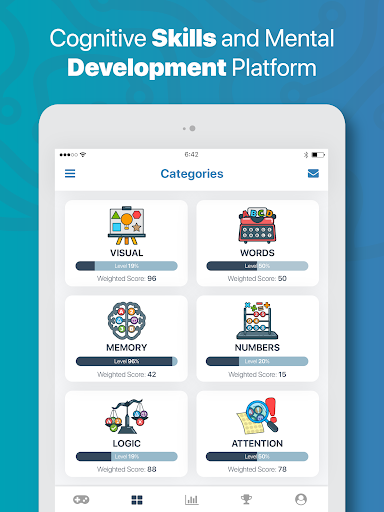
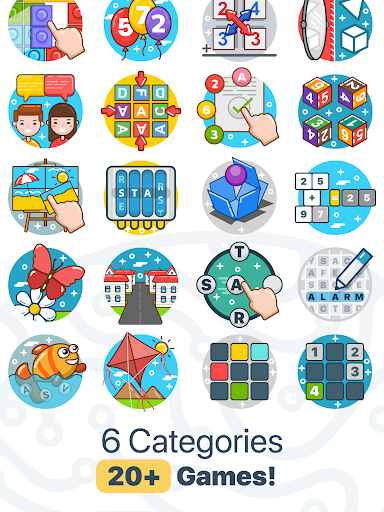
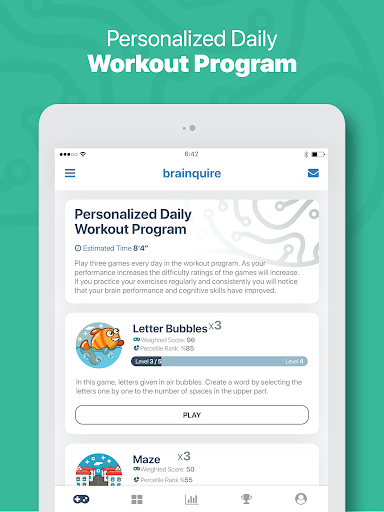
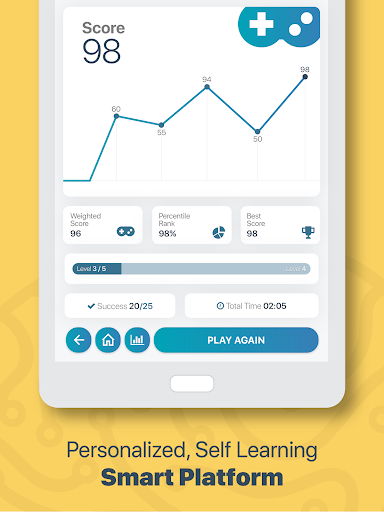

Brainquire is covered in the LogicAppGuide Android app library as a Puzzle app. Use this page to compare fit, screenshots and public signals, while the official Google Play listing remains the source for installation decisions.
For the Puzzle category, LogicAppGuide looks for a clear use case: what problem the app solves, how quickly a reader can judge fit, and whether its screenshots and public signals make sense beside nearby picks.
Its 4.5 star average is a strong public signal, but the most useful check is whether recent reviewers still mention stable performance, fair pacing and acceptable ad load.
The visible update date is 2025-09-07. Treat that as a maintenance clue, then confirm on Google Play because version notes, compatibility and permissions can change after this page is generated.
Before opening the official listing for Brainquire, compare the screenshots with your actual use case and check whether the developer, pricing model and permission requests match what you expect from this type of app.
Ratings, screenshots, version and install tier are treated as public store signals, not as a LogicAppGuide endorsement.
Use the official listing to confirm permissions, current pricing, compatibility and the newest user reviews.
Review basis: Google Play listing metadata, store description, screenshots, public rating signals, monetization flags, and LogicAppGuide category comparison.
Brainquire is not a single puzzle game in the usual mobile sense. Halici Bilgi Islem A.S. presents it as a cognitive skills and mental development platform, with exercises across verbal, quantitative, visual, logical, memory, and attention categories. That wider scope is the first thing to understand. Players looking for one familiar mechanic, such as Sudoku, water sort, nonograms, or sliding blocks, may find Brainquire more like a structured training hub. Its value depends less on one addictive board design and more on whether its mix of mini-games, assessment, and personalization feels useful over repeated sessions.
The app's public footprint is moderate. It lists 500,000+ installs, 557,582 real installs in the local metadata, 6,113 ratings, 5 written reviews, and a 4.4545455 score. The score is healthy, and the install base is meaningful, but the written review count is unusually small for an app with more than six thousand ratings. That does not invalidate the rating, but it does make the evidence thinner than it would be for a puzzle app with hundreds or thousands of detailed comments. Brainquire should be evaluated as a promising, established educational app rather than a massively proven category leader.
The core pitch is personalized cognitive exercise. The description says the app observes performance during gameplay, identifies learning characteristics, and uses machine learning techniques to suggest game options that may increase learning speed. It also says the platform is supported by The Scientific and Technological Research Council of Turkey and developed with input from scientists, engineers, psychologists, educators, and mind-game competitors. Those are stronger claims than the average "train your brain" puzzle listing. They suggest the developer wants Brainquire to be taken seriously as an assessment and development tool, not just a casual distraction.
That ambition is both a strength and a point that deserves caution. Games can practice attention, memory, pattern recognition, mental arithmetic, and logic. A well-designed training platform can help users notice strengths and weaknesses, especially when it tracks performance consistently. But broad cognitive improvement is hard to prove from a store listing alone. Brainquire may be useful for practice, engagement, and self-monitoring, but users should not treat it as a medical, therapeutic, or guaranteed IQ-improvement product. Its best promise is practical: it gives you many short tasks that exercise different mental skills and adapts the next tasks based on your performance.
The level rhythm is likely different from a traditional puzzle campaign. Instead of clearing one map of increasingly difficult boards, Brainquire is built around categories. A session might involve a visual reasoning drill, then a memory exercise, then a quantitative challenge, with the platform collecting results behind the scenes. That format suits players who want variety and feedback. It is less suitable for people who want to master a single mechanic over hundreds of levels. If you like knowing exactly what kind of puzzle you will get every time you open an app, Brainquire may feel broad. If you get bored with one puzzle type, the breadth is a major advantage.
The category mix is sensible. Verbal exercises can test vocabulary, language association, or word reasoning. Quantitative exercises can practice arithmetic and numerical relationships. Visual tasks can involve spatial comparison, pattern completion, or image memory. Logical tasks can ask for rule discovery. Memory and attention drills can push recall, focus, and quick discrimination. The success of this design depends on clarity: each exercise needs understandable instructions, fair scoring, and enough variation to avoid becoming rote. The listing is short, so users should test several categories before deciding whether the platform's personalization feels meaningful or merely decorative.
Brainquire's audience is broader than most Android apps in this review set. It can appeal to adults who like daily brain-training routines, students who enjoy structured mental challenges, families looking for educational puzzle play, and older users who want light cognitive practice. The Everyone rating supports that broad audience, and the categories include casual, brain teaser, brain training, single player, stylized, and offline tags in the metadata. Offline support is useful because brain-training exercises should not require a constant connection once content is available, although account features, personalization sync, ads, and purchases may still need internet access.
Monetization is the main practical caution. Brainquire is free, ad supported, and offers in-app purchases from $3.99 to $74.99 per item. That is a higher starting price than many casual puzzle IAP ranges and a significant top-end purchase for an educational app. The listing does not specify exactly what purchases unlock. They may involve subscriptions, premium exercises, reports, or expanded access, but the local metadata only gives the price range. Users should check what is free, what is locked, and whether the app remains valuable without paying. Parents should enable purchase controls before handing it to children because the content rating does not address spending.
Compared with single-mechanic puzzle apps, Brainquire is less focused but potentially more useful as a routine. A nonogram app trains logic and spatial deduction through one grid language. A water-sort app trains sequencing through one narrow rule set. Brainquire tries to cover multiple cognitive domains and personalize the path. Compared with big commercial brain-training platforms, its public review footprint is smaller, but the description's development background is more specific than many generic "brain games" listings. The right comparison is not Royal Match or 2048; it is a daily cognitive exercise notebook with game mechanics.
Overall, Brainquire is an interesting educational Android app with a credible concept, meaningful install base, strong rating, and unusually serious development claims. Its strengths are breadth, personalization, category coverage, offline-friendly positioning, and a clear focus on assessment rather than pure entertainment. Its weaknesses are the limited written review evidence, the need to verify the science and usefulness firsthand, ad support, and a purchase range that can become expensive. It is best for users who want a varied mental workout and are willing to treat the results as guidance, not a formal diagnosis. For pure puzzle fun, choose a focused game. For structured cognitive practice, Brainquire is worth trying carefully.