Source check
Ratings, screenshots, version and install tier are treated as public store signals, not as a LogicAppGuide endorsement.
Curated brain-training & logic apps for Android


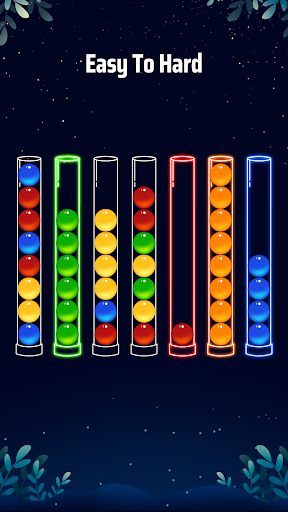


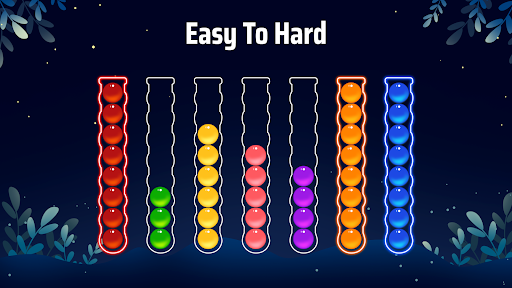
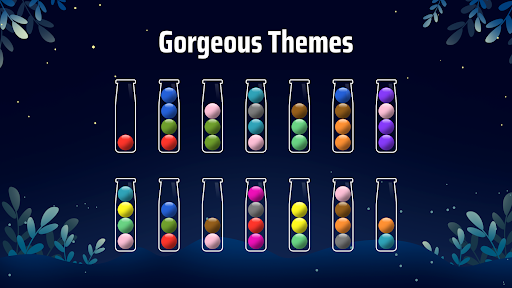
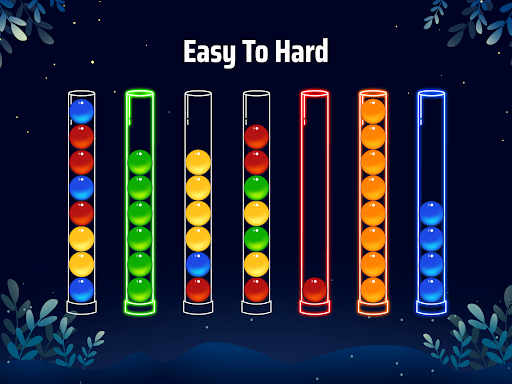

Ball Sort - Color Puzzle Game is covered in the LogicAppGuide Android app library as a Puzzle app. Use this page to compare fit, screenshots and public signals, while the official Google Play listing remains the source for installation decisions.
For the Puzzle category, LogicAppGuide looks for a clear use case: what problem the app solves, how quickly a reader can judge fit, and whether its screenshots and public signals make sense beside nearby picks.
Its 4.9 star average is a strong public signal, but the most useful check is whether recent reviewers still mention stable performance, fair pacing and acceptable ad load.
The visible update date is 2025-12-18. Treat that as a maintenance clue, then confirm on Google Play because version notes, compatibility and permissions can change after this page is generated.
Before opening the official listing for Ball Sort - Color Puzzle Game, compare the screenshots with your actual use case and check whether the developer, pricing model and permission requests match what you expect from this type of app.
Ratings, screenshots, version and install tier are treated as public store signals, not as a LogicAppGuide endorsement.
Use the official listing to confirm permissions, current pricing, compatibility and the newest user reviews.
Review basis: Google Play listing metadata from public/dataJson/Puzzle.json, store description claims, public rating/install signals, ad/IAP declarations, screenshots count, and LogicAppGuide puzzle category comparison.
Ball Sort - Color Puzzle Game is a tube-sorting puzzle built around one of mobile puzzle design's most durable pleasures: turning a mixed, messy set of colors into neat single-color containers. The listing describes balls, bottles, cups, and drinking bottles, but the core rule is the familiar sort loop. Tap a tube, move the top ball, and place it only where the rules allow until every container holds one color. It is easy to understand in seconds, yet it can create surprisingly tangled boards when colors are layered in the wrong order.
The mechanic works because every move changes future access. A ball buried under three other colors is not just unavailable; it also blocks the color beneath it. Good levels force the player to think about temporary storage, not only the final destination. Empty tubes are precious because they create room to reorganize stacks. The listing mentions backtracking to a previous step and adding more tubes, cups, or bottles when stuck. Those tools can be very helpful, especially for casual players who want relaxation more than punishment.
The rhythm is calm and incremental. There is no need for quick reflexes, vocabulary, math, or precision drawing. You study the top balls, make a legal move, reassess the board, and slowly reduce disorder. That makes the game a natural fit for short breaks and background relaxation. It also explains why ball-sort games have become so widespread: they deliver a small sense of control and completion without requiring a long tutorial.
Difficulty depends on how many colors, how many containers, and how deeply the colors are interleaved. Early boards are usually almost automatic, teaching the rule that matching colors can stack and complete tubes should be protected. Harder boards become planning puzzles. You may need to decide whether to free a buried color now, preserve an empty tube for later, or undo a move that seemed helpful but trapped an important ball. The listing's ability to backtrack is important because blind trial and error would otherwise become frustrating once boards get dense.
The public numbers are unusually strong. The local metadata shows 10,000,000+ installs, 14,391,312 real installs, 81,267 ratings, and a 4.9116144 score. That is an extremely high rating at a large scale. The histogram is heavily positive, with 77,257 five-star ratings in this snapshot. Public ratings are not a perfect measure of design quality, but for a simple casual puzzle they do indicate that the app is satisfying its core audience. It also has 3,912 written reviews, enough that recent comments should reveal whether ads, crashes, or level tuning have become concerns.
The app is free, ad-supported, and includes in-app purchases, with the listed range showing a $2.99 item. Compared with many puzzle apps, that IAP range is modest. The likely purchase may be an ad removal or helper-related item, though the metadata does not specify. Ads remain the more important caution. A ball-sort game depends on a smooth, meditative loop; ads after every level or after failed attempts can change the mood quickly. Anyone installing for relaxation should test the first several sessions before deciding it is a keeper.
Offline play is a major plus. The store description explicitly says no Wi-Fi is needed, and the category tags include Offline. That makes sense for a sorting puzzle because the level logic does not require live opponents or streaming content. It is a good travel game, waiting-room game, or low-attention evening game. The listing also mentions holiday rewards and customization for sorting levels and containers, which suggests the app has some event and cosmetic layers on top of the basic puzzle.
Compared with water-sort games, Ball Sort is mechanically similar but often visually cleaner because the unit being moved is discrete. Liquid games can be satisfying, but it is sometimes harder to judge exact color layers if the art is glossy or animated. Ball Sort's challenge is more countable: each sphere is a visible unit in a stack. Compared with block puzzles, it is less spatial and more sequential. Compared with Sudoku, it is far lighter logically, but also easier to play when tired.
The best audience is anyone who wants a gentle sorting puzzle with very low onboarding friction. It is suitable for casual players, commuters, children with purchase controls enabled, and adults who like organizing tasks. It is less ideal for players who want deep strategic systems, handcrafted logic, or ad-free premium design from the start. Color perception also matters. Because the entire game relies on distinguishing colors, players should inspect screenshots and actual levels for contrast, especially if similar shades appear in the same board.
The app's strengths are clear: simple rules, offline play, undo/backtrack support, optional extra-container help, a sleek visual pitch, a huge install base, and an exceptional rating average. Its weaknesses are mostly about the free-to-play layer: ads, possible event prompts, and the question of whether hard levels encourage helper use too aggressively. Overall, Ball Sort - Color Puzzle Game looks like one of the more successful mainstream color-sort Android apps. If you like the genre, it is easy to recommend trying. Just verify ad frequency and color clarity early, because those two details determine whether the relaxing loop stays relaxing.